
A patio cover is one of the smartest upgrades a New Orleans homeowner can make. With summer temperatures regularly in the 90s°F and heat index values that frequently exceed 100°F, approximately 62 inches of annual rainfall, and hurricane season running from June through November, the right patio cover extends your usable outdoor space while protecting your investment. This guide covers every type of patio cover available, how aluminum, wood, and vinyl perform in the Louisiana climate, what installation costs look like in 2026, and how to choose the option that fits your home, budget, and lifestyle.
TL;DR
- Best material for New Orleans: Aluminum. It doesn’t rot, barely needs maintenance, and comes in an insulated version that makes a real difference under a Louisiana summer sun. Vinyl works well on a tighter budget. Wood looks beautiful but needs consistent upkeep to survive the humidity here.
- Most popular options: Solid insulated aluminum covers for full rain and sun protection, bioclimatic pergolas with motorized louvers for flexibility, and screened enclosures for anyone tired of sharing their outdoor space with mosquitoes.
- What you’ll spend in 2026: Most New Orleans homeowners land somewhere between $4,000 and $12,000 for a standard installed cover. Screened enclosures, insulated systems, and bioclimatic pergolas push higher.
- You need a permit. Any permanent cover attached to your house requires one in Orleans Parish and the surrounding parishes. Big Easy Patios pulls permits on every project, no shortcuts.
- Get a free estimate: call (504) 285-2659 or reach out online.
What is a Patio Cover and Why Does It Matter in New Orleans?
Plenty of people move to New Orleans and discover the same thing in their first summer: that beautiful backyard they fell in love with is essentially unusable from June through September. It’s not just hot; it’s the kind of hot where a heat index of 105°F on a Tuesday afternoon in August is just Tuesday.
Throw in about 62 inches of rain a year (nearly double the U.S. average of 38 inches), humidity that stays above 70% every single month, and a hurricane season that runs June through November, and you start to understand why a covered patio isn’t a luxury here.
It’s the difference between an outdoor space you actually use and one you look at through a window.
We’ve been building outdoor spaces in New Orleans for over 30 years. The number one thing we hear from homeowners who finally add a cover? “I wish I’d done this years ago.” Not because the structure itself is life-changing, but because it completely changes how you use your home.
Morning coffee outside in July. Family dinners during a light rain. A real spot to watch the game instead of squeezing everyone inside. That’s what a patio cover does in New Orleans.
There’s also the practical side. Patio furniture that sits uncovered in this climate will fade, crack, or fall apart within a season or two. Mold and mildew take hold fast on any exposed surface. A good cover protects all of it, and it shades your home’s exterior walls and windows in the process, which actually helps your AC bill during the hottest months.
The Types Worth Knowing About
Not all patio covers do the same job. Before you start getting quotes, it’s worth knowing what your options actually are.
Solid Covers

Most of what we install in the New Orleans area falls into this category, usually in aluminum or insulated aluminum.
Lattice Covers
A lattice cover has that classic open-grid look that lets some light filter through. It doesn’t block rain, but it cuts the sun significantly and looks great with climbing plants or string lights woven through it.
Good fit if you want the aesthetic without needing all-weather protection.
Insulated Covers
Think of insulated aluminum as the upgraded version of a standard solid cover. There’s a foam core sandwiched between two aluminum skins, and it genuinely makes a difference in how the space feels.
A plain aluminum panel absorbs heat and radiates it down; on a July afternoon in New Orleans, that adds up quickly. The insulated version blocks that transfer. We recommend it for anyone planning to spend real time out there during the summer.
Pergolas
A traditional pergola gives you shade and good looks, but not much rain protection. Where it gets interesting is with bioclimatic pergola systems like the B-Cube line we carry. Those have motorized louvers in the roof that you can open or close depending on the weather.
Full shade when the sun’s beating down; let the night air through when it cools off; keep everything dry when the afternoon storm rolls in. It’s the most flexible option available, and nothing else on the market does the same thing.
Retractable Awnings and Fabric Covers
These are the most affordable option and the most flexible; you can roll them up and store them when a storm’s coming, which matters during hurricane season.
The tradeoff is that they give you the least protection overall and aren’t really a substitute for a permanent structure. Better as a secondary shade option or for smaller spaces.
Screened Enclosures
If mosquitoes are your main complaint, and for a lot of New Orleans homeowners, a screened enclosure solves that problem while also giving you overhead cover.
You get the outdoors without everything that bites. These are one of the most popular things we build across the metro area.
Aluminum vs. Wood vs. Vinyl: Which Actually Holds Up Here
This is the question we get most often, and the honest answer is that the New Orleans climate doesn’t treat all materials the same way.
| Aluminum | Wood | Vinyl | |
|---|---|---|---|
| Humidity resistance | Excellent: doesn’t absorb moisture at all | Poor to fair; will rot without regular treatment | Good: doesn’t absorb water |
| Hurricane wind resistance | Good: needs proper anchoring per Louisiana wind codes | Good if built and anchored right | Fair; tends to get brittle over time from UV exposure |
| Maintenance | Basically none; occasional hose-down | High; needs sealing or staining every year or two | Low; just clean it occasionally |
| Insulation available? | Yes; foam-core panels make a big difference | Not really | Not really |
| Customization | High; powder-coated in any color, multiple styles | High; can match any architectural style | Moderate; hard to change the color later |
| Realistic lifespan here | 20 to 30+ years | 10 to 20 years with real commitment to maintenance | 15 to 25 years |
| Cost | Moderate to high | Moderate to high | Low to moderate |
| Best for | Most homeowners who want it to last | Homeowners who prioritize natural aesthetics and will maintain it | Budget-conscious homeowners who want low upkeep |
The Honest Case for Aluminum
Aluminum is what we recommend to most people, and after 30 years of watching how different materials hold up in this climate, the reasons are straightforward. It doesn’t absorb moisture, doesn’t rust when it’s powder-coated, doesn’t rot, and essentially takes care of itself.
The insulated version addresses the one legitimate complaint about aluminum in the South, heat buildup. You actually want to be outside on a hot afternoon.
We anchor every aluminum installation to meet Louisiana’s wind load requirements, which is something you want to confirm with any contractor you’re talking to.
The Honest Case for Wood
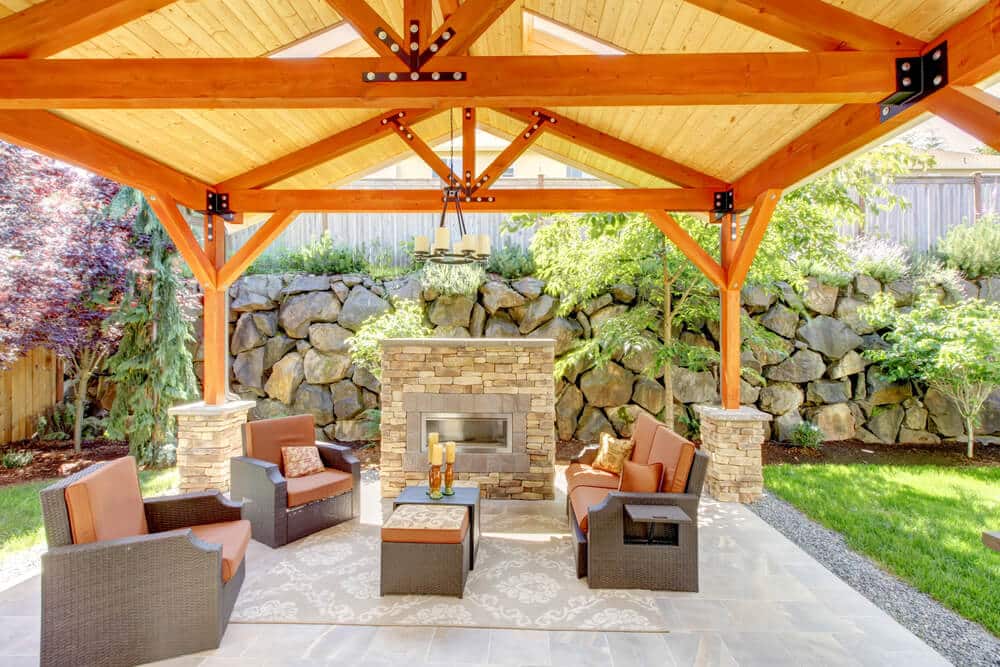 Wood looks genuinely beautiful, and for certain homes in certain neighborhoods like Garden District, Uptown, parts of older Metairie. The natural aesthetic matters, and aluminum just doesn’t fit the architecture.
Cedar and redwood hold up better than most species in humid climates because they have natural resistance to insects and decay. But wood in New Orleans is a real commitment. Skip the annual sealing and staining for a couple of seasons and you’ll see what the humidity can do to an untreated structure.
If you’re willing to put in the maintenance, we can make wood work. We can also help you look at pressure-treated or composite options that give you a natural look with more climate resistance built in.
The Honest Case for Vinyl
Vinyl is often underestimated. It doesn’t absorb water, doesn’t need sealing, holds up well in humidity, and is easy to keep clean. The main limitations are that you’re mostly locked into the color and finish you start with, and it can fade and get brittle over many years in direct Louisiana sun.
For homeowners who want a clean, low-maintenance cover without spending top dollar, vinyl delivers solid value.
Not sure which direction to go? We’re happy to talk through your specific situation. Call Big Easy Patios at (504) 285-2659 or get a free estimate here. We serve New Orleans, Metairie, Kenner, Mandeville, Covington, Madisonville, and Abita Springs.
How to Pick the Right One for Your Home
Four things matter most when you’re making this decision:
- How much maintenance are you actually willing to do? Not how much you think you’ll do, specifically how much you’ll realistically do two or three years from now when life is busy. If the answer is not much, aluminum or vinyl. If you genuinely enjoy maintaining your property and care about the natural look, wood is on the table.
- What does your house look like? A modern ranch in Metairie and a 1920s shotgun house in Mid-City call for different things. We can match cover styles to almost any architecture, but it’s worth thinking about before you decide on a material.
- What’s your real budget, including long-term? Vinyl costs less upfront but has a shorter lifespan. Wood costs more upfront and has ongoing maintenance costs on top. Aluminum has the highest upfront cost of the three and the lowest total cost over its lifetime. Know which math works for you.
- What do you actually need the space to do? If you’re planning to furnish it, put in lighting and a fan, and use it through rainstorms, go with a solid insulated cover. If you mainly want some shade and an open feel, a lattice cover or a pergola might suit you better.
What Patio Covers Cost in New Orleans in 2026
Pricing varies based on size, material, structure type, and what you add to it. Based on current local market data, here’s what homeowners across the New Orleans metro are actually paying:
| Cover Type | Material | Installed Cost Range |
|---|---|---|
| Standard solid cover | Aluminum | $4,000 to $9,000 |
| Insulated solid cover | Aluminum with foam core | $5,500 to $12,000 |
| Lattice cover | Aluminum | $2,500 to $6,000 |
| Solid cover | Wood (cedar or pressure-treated) | $4,000 to $10,000+ |
| Solid cover | Vinyl | $2,500 to $6,500 |
| Retractable awning | Fabric | $1,500 to $4,500 |
| Bioclimatic pergola (motorized louvers) | Aluminum, B-Cube system | $8,000 to $20,000+ |
| Screened enclosure | Aluminum frame + screen | $6,000 to $15,000 |
These are installed ranges that include labor and standard site prep. Your number will move based on size, what you add, and what your specific site requires. The cleanest way to know what your project actually costs is a free on-site estimate.
A few things that push the number up or down:
- Size is the biggest driver. Most contractors price per square foot. A 10×10 aluminum cover runs roughly $3,500 to $5,000; a 12×20 with accessories lands significantly higher.
- Attached vs. freestanding. If your cover attaches to the existing roofline, that’s usually more efficient to build. Freestanding structures need their own footings and additional framing, which adds to the cost.
- Permits. They’re required, they add cost and timeline, and any contractor who suggests skipping them is doing you a disservice. If a structure isn’t built to code, your homeowner’s insurance may not cover it when you need it most.
- Accessories. A fan and some recessed lighting turns a covered slab into an actual room. It adds to the project budget but dramatically changes how much you actually use the space.
- Wind zone engineering. This is non-negotiable in southeast Louisiana. Every permanent structure we build is engineered to meet local wind load requirements. Not every contractor does this ; ask specifically.
Ready to get an actual number for your project? Call Big Easy Patios at (504) 285-2659 or request a free estimate online. We serve New Orleans, Metairie, Kenner, Mandeville, Covington, Madisonville, and Abita Springs.
What to Ask Before You Hire a Contractor
There’s a wide range in contractor quality in this market, and the cheapest quote isn’t always the safest bet. Before you sign anything, get answers to these:
- Do they pull permits? This isn’t optional for permanently attached structures. If a contractor is offering to skip it to save money or time, that’s your problem, not theirs. If something goes wrong later, it’s your house and your insurance.
- Do they have local references? Ask for photos and references from actual New Orleans area projects. Building in a hurricane zone is different from building anywhere else, and experience in other markets doesn’t automatically transfer.
- Are they licensed and insured in Louisiana? You can verify contractor licensing through the Louisiana State Licensing Board for Contractors (LSLBC).
- What wind load does the structure meet? Get a specific answer. Louisiana’s coastal parishes have defined requirements for attached structures.
- What’s covered by warranty? The manufacturer’s warranty on materials is separate from the contractor’s warranty on labor. Ask about both.
We’ve been in this business in New Orleans for over 30 years. Every project we build is permitted, engineered for local wind loads, and comes with our satisfaction guarantee.
Let’s Talk About Your Project
Thirty years and 5,000+ projects across New Orleans and the North Shore. We know what holds up here, what doesn’t, and how to build something that’ll still look good a decade from now.
Call (504) 285-2659 or request your free estimate.
Common Questions We Hear
Do I really need a permit for a patio cover in New Orleans?
Yes, for any permanent structure attached to your home. Big Easy Patios handles the permit process on every project ; it’s just part of how we work.
What’s the best material for this climate?
Aluminum, in most cases. It doesn’t absorb moisture, doesn’t rot, needs almost no maintenance, and comes in an insulated version that makes the covered space genuinely comfortable in Louisiana summers. If budget is the main concern, vinyl is a solid choice. Wood works but requires real commitment to annual upkeep.
What do I do with my patio cover during hurricane season?
If it’s a permanent aluminum or vinyl cover, it should already be engineered and anchored to meet Louisiana wind codes; that’s what proper installation looks like. Retractable awnings and fabric covers should come down and get stored before any named storm.
Will a patio cover actually lower my energy bill?
It can, particularly if it’s covering windows or walls on the south or west side of your house. Blocking afternoon sun reduces heat gain inside, which takes some load off your AC. The amount of savings depends on your home’s setup, insulation, and how much direct sun the cover is blocking.
How long does installation take?
Most standard covers go in within one to three days. Add permit lead time for anything permanent and attached; that varies by parish but is usually a few weeks. We give you a clear timeline with every quote so there are no surprises.
Insulated vs. non-insulated aluminum: does it really matter?
In most of the country, maybe not. In New Orleans, yes. A plain aluminum panel absorbs heat from the sun and radiates it down into the space below. The insulated version has a foam core that blocks that transfer. The difference in comfort on a July afternoon is real, and we recommend insulated panels for any space where you’re planning to actually spend time during summer.
Keep Exploring
- Custom Patios New Orleans
- Pergolas New Orleans
- Screenrooms New Orleans
- Motorized Blinds for Patios
- Outdoor Kitchens New Orleans