
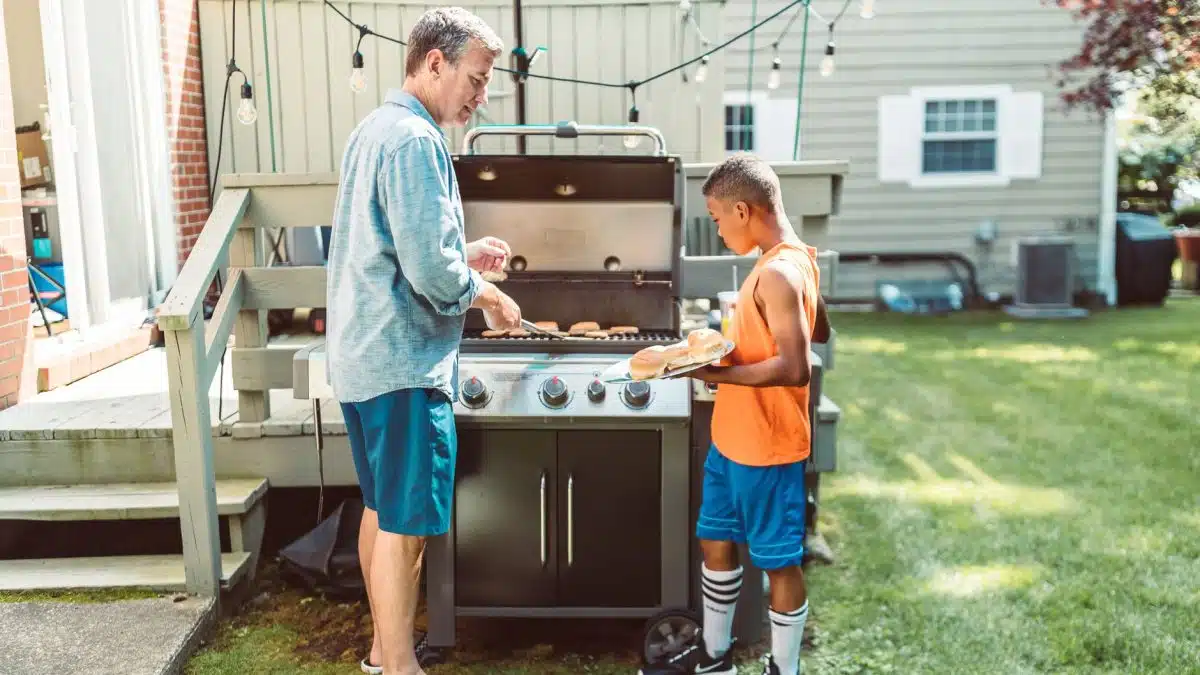
Grilling under an ordinary covered patio in New Orleans goes against the safety guidance most people should follow: the National Fire Protection Association says a grill should be placed well away from the home and out from under eaves and overhanging branches. A screened porch is a firmer no for charcoal, since the Consumer Product Safety Commission says charcoal grills belong outside in the open air.
That’s frustrating in a city where an afternoon thunderstorm can roll in just as the burgers go on. The good news is there are safer ways to cook near your outdoor living space, and a covered outdoor kitchen designed for cooking is a different thing from a grill pushed under a patio roof. We design and build covered outdoor kitchens in New Orleans, and this guide covers what the safety guidance says and how cooking areas get planned around it.
This article is general safety information. Your grill’s manual and your local fire code come first, and questions about your own setup belong with the fire department or your insurer. If you rent or live in a condo, check your lease or association rules before you grill.
Key takeaways
- NFPA’s grilling tip sheet says propane and charcoal grills should only be used outdoors, well away from the home and out from under eaves.
- CPSC warns that burning charcoal can produce carbon monoxide and says to use charcoal grills only outside in the open air.
- A screened or enclosed porch is not a place for a charcoal grill.
- A covered outdoor kitchen is designed around the appliance’s listed clearances and ventilation, which a standard patio cover isn’t.
Can you grill under a covered patio?
For a freestanding propane or charcoal grill under a typical attached patio cover, the general safety answer is no. NFPA’s grilling safety tips say “the grill should be placed well away from the home, deck railings and out from under eaves and overhanging branches.” A patio roof attached to the house sits a lot like an eave, with the cooking heat and smoke rising straight into it.
Heat isn’t the only issue. Grease flare-ups throw flame upward, and smoke and grease residue collect on the ceiling and fan blades over time. When we design a New Orleans patio cover, we ask early whether anyone plans to cook under it, because the answer changes where the cooking zone goes.
Can you grill in a screened porch?
Not with charcoal. CPSC’s charcoal safety sheet says “NEVER burn charcoal inside homes, vehicles or tents” and to “only use charcoal barbecues outside in the open air,” because burning charcoal can give off carbon monoxide. A screened porch has walls and a roof, and CO can build up in a space that isn’t fully open.
The same reasoning makes us cautious about any open flame inside a screen room. Screen mesh and fabric furniture sit close to the heat, and a closed-in room holds smoke. If you want to cook and eat in a screened space, the usual answer is a cooking station just outside the screen wall with a short walk to the table. If you smell gas while cooking, NFPA’s advice is to get away from the grill and call the fire department.
How do people grill safely near a New Orleans patio?
A few approaches work on city lots, including the narrow side yards beside shotgun houses:
- Grill in the open, eat under cover. Keep the grill out past the edge of the roof, on a noncombustible surface, with the table under the cover a few steps away.
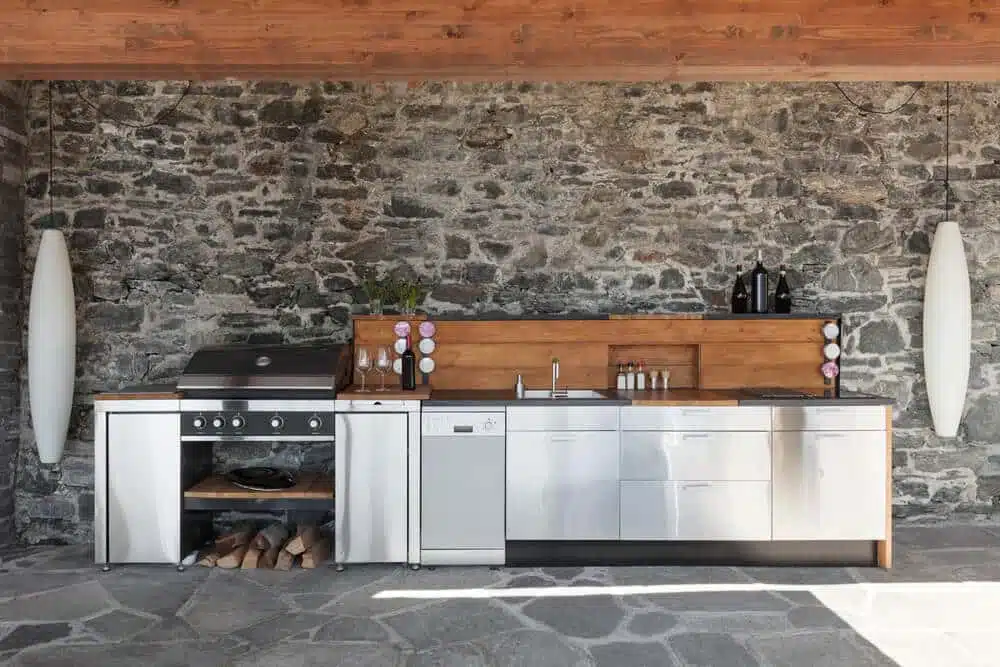
- Build a dedicated cooking zone. A covered outdoor kitchen is planned around the grill’s own clearance and ventilation requirements from the start, with masonry, stone, or concrete counters instead of wood framing near the heat.
- Read the manual. Built-in and freestanding grills list their own clearances to combustible materials. Those numbers come from the manufacturer, not from us, and they’re the ones to follow.
- Keep the basics. NFPA recommends keeping children and pets at least 3 feet from the grill area, cleaning grease buildup from the grates and trays, and never leaving a lit grill unattended.
Our article on must-have outdoor kitchen features covers layout ideas, and our guide to choosing outdoor kitchen appliances helps when you’re comparing grills.
What makes a covered outdoor kitchen different from a patio cover?
Planning. On our New Orleans outdoor kitchens, the cooking equipment is chosen first, then the roof height and ventilation are set around it. Gas and electrical runs are planned at design time with the people licensed to do them. A patio cover built for shade and rain wasn’t planned that way, even if it looks similar from the yard.
That difference matters in this climate. New Orleans winters are mild enough that plenty of people grill through December, and summer downpours are frequent, so the pull to cook under a roof is real all year. A cooking zone designed for it is the way to get there, and if shade over the dining side is the bigger goal, our tips on keeping a covered patio cool through a New Orleans summer help there. Our covered outdoor kitchens page explains how we lay out cook, prep, serve, and sit zones. For bigger open-flame setups, our post on a crawfish boil pavilion covers where a burner belongs under an open-sided structure.
Should you check with your insurer or landlord?
Yes. Coverage and rules vary by policy and by lease, and we can’t tell you what yours say. If you rent or live under condo or HOA rules, read the rules on grills before you buy one. If you’re planning a permanent outdoor kitchen, ask your insurer how it treats the addition. A built-in kitchen is also construction, so check with the City of New Orleans permit office before work starts. We handle that step on the kitchens we build.
Frequently asked questions
Is an electric grill okay under a covered patio?
It depends on the grill. Electric models don’t burn fuel, but they still get hot and produce smoke and grease. Check the manufacturer’s manual for outdoor use and clearances, and if you’re not sure an outdoor outlet is right for it, have a licensed electrician look at the circuit.
How far from the house should a grill be?
NFPA says “well away from the home” without a single distance for every grill. Your grill’s manual lists the clearances the manufacturer requires, and local rules can add to them.
Can I add a vent hood to my existing patio cover?
Possibly, but that’s a design question, not a quick fix. Outdoor-rated hoods have their own installation requirements, and the roof structure and the electrical work both have to match. We’d look at it as converting the space into a cooking zone.
Want a place to cook under cover without guessing about safety? We’ll walk your New Orleans yard and talk through how you cook, then design a covered kitchen around your equipment. Call (504) 285-2659 or see our work across the city on the New Orleans service area page.


