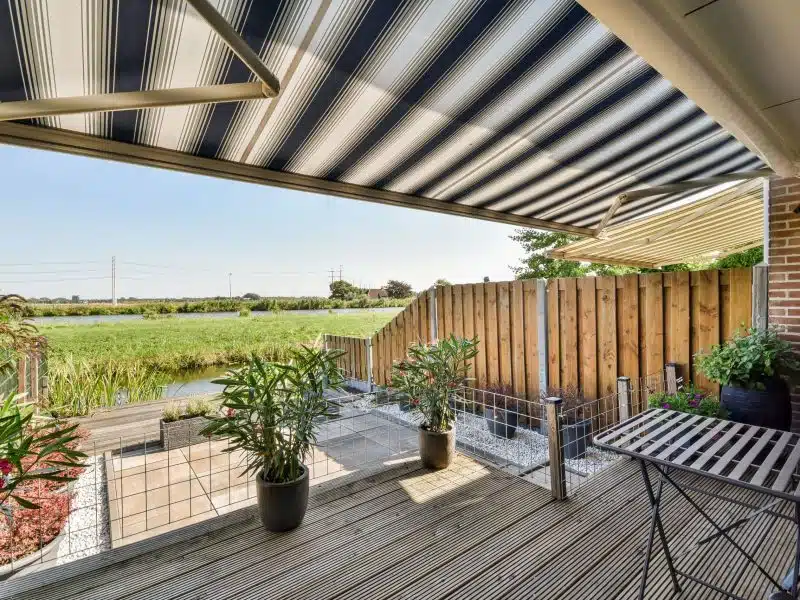
A covered patio should be the coolest spot in your yard from June through September, but around New Orleans that isn’t automatic. Our summers stack up humidity, heat, and intense UV, then add afternoon storms and hurricane season. Shade alone helps, yet plenty of covered patios in Metairie, Kenner, and Mandeville still feel like a sauna by 3 p.m. because heat gets trapped under the roof and the air stops moving.
The good news is that a few smart choices turn a hot cover into a genuinely comfortable outdoor room. It comes down to blocking heat before it reaches the roof deck, keeping air moving so humidity doesn’t hang around, and cutting the low-angle sun that sneaks in sideways every afternoon. Here’s how we help homeowners across the metro keep a covered patio livable through the hottest months, and why the payoff often reaches into your home’s cooling load too.
Key Takeaways
- An insulated, foam-filled roof blocks radiant heat far better than an open or single-skin cover, so the space under it stays noticeably cooler.
- Ceiling fans and good airflow matter more here than in dry climates because moving air is what makes our humid heat feel bearable.
- Orientation and extra shade on the sun-facing side cut direct sun before it ever hits the patio.
- Retractable or motorized screens and shades block low afternoon sun and keep bugs out during storm season.
- Misting systems and light-colored surfaces shave a few more degrees, and shade over the right wall can ease your home’s cooling load.
Start With an Insulated Roof
The single biggest lever is the roof itself. A single-skin aluminum panel or an open lattice lets the sun bake the surface, and that heat radiates straight down onto you. An insulated, foam-filled panel works differently. Its foam core stops radiant heat from passing through, so the underside stays cool even when the top is soaking up full New Orleans sun. You feel the difference the moment you step under it.
That’s why we build most of our New Orleans patio covers with insulated panels rather than open frames. If you want to understand where your money goes, our patio cover cost guide breaks down how roof type affects both comfort and budget. In our climate, the insulated upgrade pays you back in usable hours outside.
Keep the Air Moving
In a dry desert, still shade feels fine. Here it doesn’t, because humidity slows how fast sweat evaporates off your skin. That’s the whole reason a breeze feels so good on a muggy Louisiana afternoon. Adding one or more ceiling fans under your cover moves air across the space, speeds up evaporation, and makes the patio feel several degrees cooler without changing the temperature at all.
Fan placement matters. We size and position fans so the airflow reaches the seating and dining zones, not just the center of the roof. Pair that with an open layout that lets cross-breezes flow through, and you get steady air movement instead of a stagnant pocket that traps humidity.
Beat the Afternoon Sun With Orientation and Shade
Morning sun is easy. The problem is the low western sun that pours in under the roof from about 4 p.m. onward. A cover blocks overhead rays but does nothing for light coming in at a sharp sideways angle, and that’s exactly when most families want to be outside. So the sun-facing side deserves extra attention.
Depending on how your patio faces, that might mean a deeper overhang, a shade wall, planting on the west edge, or an added screen. If you’re comparing options, our guide on retractable versus fixed awnings walks through the tradeoffs for our weather. Because that same shade can fall across a wall or window of your house, it often trims the heat load your AC fights all afternoon. Shade over an outdoor kitchen wall keeps that zone workable even when the grill is running.
Add Screens and Motorized Shades
Retractable or motorized screens are one of the most flexible tools for our climate. Drop them on the west side in the late afternoon to block low sun, roll them up when the light softens, and pull them down at dusk when the mosquitoes come out. During storm season they knock down wind-driven rain that would otherwise blow sideways under the cover, and motorized versions do it all at the push of a button.
These shades also cut heat gain, which ties directly into home efficiency. The same principle behind interior automation applies outside; our post on how motorized blinds improve energy efficiency explains how blocking sun before it enters a space reduces cooling demand. On a patio, screens do that work at the edge of your home where the heat would otherwise build.
Cool the Space a Few More Degrees
Once the roof, airflow, and shade are handled, a few finishing touches push comfort further. A misting system releases a fine spray that evaporates on contact and drops the surrounding air temperature, and it works well under a cover where the mist stays contained. Light-colored surfaces help too, since a pale floor, ceiling, and furniture reflect heat instead of soaking it up.
None of these steps replaces a good cover, but stacked together they add up. An insulated roof, moving air, blocked afternoon sun, screens, misting, and light surfaces each remove a slice of heat. Combine them on a custom patio cover built for our metro and you get an outdoor room you actually want to use in July. Homeowners throughout our New Orleans service area see the same result once these pieces are in place.
Frequently Asked Questions
Does an Insulated Patio Cover Really Make a Difference in New Orleans Heat?
Yes, and it’s the change people notice most. A foam-filled insulated roof blocks the radiant heat that an open or single-skin cover lets through, so the underside stays cool even under direct sun. In our humidity and long cooling season, that difference is the gap between a patio you avoid at midday and one you can sit under comfortably.
Will a Covered Patio Help Lower My Home’s Cooling Bill?
It can, depending on placement. When the cover and its shade fall across an exterior wall, window, or door of your house, they block sun that would otherwise heat those surfaces and force your AC to work harder. You get a cooler patio and a lighter cooling load where the shade lands.
Are Ceiling Fans Worth It Under a Patio Cover?
They’re well worth it here. Because our air is so humid, moving it is what makes shade feel cool. A well-placed fan speeds evaporation off your skin and makes the space feel several degrees cooler than the thermometer reads. Fans also help the patio dry out fast after the afternoon storms that roll through most summer days.
What Blocks the Low Afternoon Sun That Gets Under the Roof?
Retractable or motorized screens on the sun-facing side are the most flexible fix. You lower them when the western sun cuts in around 4 p.m. and raise them once the light softens. A deeper overhang, a shade wall, or an awning on that side works too.
Ready to turn your covered patio into the coolest room in the house this summer? Big Easy Patios builds insulated covers, screens, fans, and shade solutions designed for our New Orleans heat and humidity. Call (504) 285-2659 or reach out through our contact page for a free consultation across Orleans, Jefferson, and St. Tammany parishes.