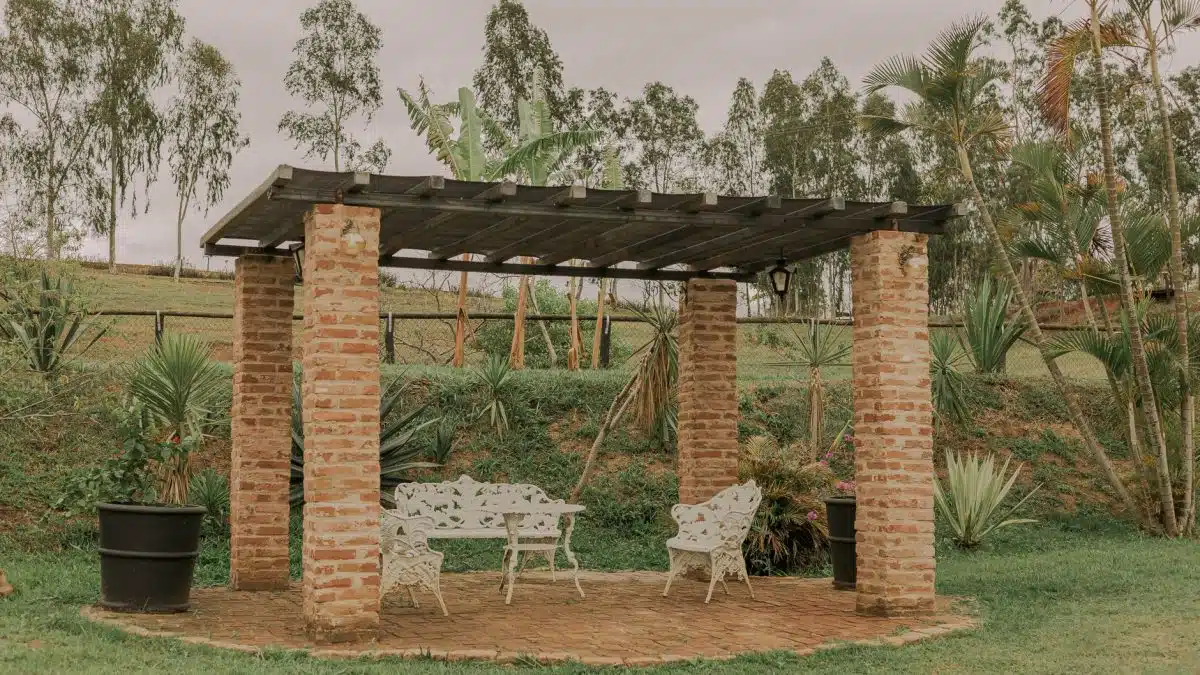
A pergola is an open-roofed outdoor structure of posts and beams, and its purpose is to give part of a yard filtered shade and a defined “room” without closing it in. In Abita Springs, where lots sit under tall pines and people move here to be outside, the bigger question is usually where to put one so it earns its keep.
We build pergolas across Abita Springs and the rest of the Northshore in wood and aluminum, from fixed slats to motorized louvered roofs. This guide covers what a pergola does well and where it falls short, then the placement ideas that suit piney Abita lots.
Key takeaways
- A pergola’s slatted roof lets partial sun through, which is the main difference from a gazebo or patio cover with a solid roof.
- Its jobs are filtered shade, a defined outdoor room, a frame for vines or lights, and a link between the house and the yard.
- Under a heavy pine canopy, open slats collect needles, so a solid or louvered roof can make more sense there.
- Inside Abita Springs town limits, removing a tree over 6 inches in diameter to make room needs a town permit.

What is a pergola?
A pergola is a freestanding or attached frame of posts that carries beams and an open grid of rafters or slats overhead. HomeAdvisor’s pergola guide describes the key difference from a gazebo this way: “A pergola has a slatted roof that allows partial sunlight to filter through,” while a gazebo “features a solid roof that provides complete shade.” Our article on the difference between a gazebo and a pergola goes deeper on that comparison.
Modern versions blur the line a little. A motorized louvered pergola rotates its roof slats, open for sun and breeze and closed when a storm rolls in. That gives you a pergola’s look with rain cover when you need it, and our pergolas page shows both the fixed and louvered styles we build.
What is the purpose of a pergola?
People ask “what is a pergola for?” because it doesn’t keep you dry the way a roof does. Here’s what it does do:
- Filtered shade. HomeGuide describes a pergola as a way to create “a partially shaded walkway or sitting area outdoors while still allowing enough sunlight to fill the space.”
- A defined room. Four posts and a beam line turn an open patch of yard into a place with edges, which changes how a space gets used.
- A frame for plants and lights. Vines like jasmine climb the posts, and string lights hang from the rafters.
- A bridge between house and yard. An attached pergola softens the line where the house meets the patio.
What an open-slat pergola doesn’t do is stop rain. If you need a dry seat during a summer storm, look at a louvered roof or a solid cover. Our post on the benefits of adding a pergola to your patio covers more of the upside.
Where should you put a pergola in an Abita Springs yard?
Abita Springs sits in the piney woods, and wooded lots shape the work. Before we draw anything here, we read the trees. These are the placements we see work best:
- Off the back door, over the patio. The most-used spot on most lots. Filtered shade where you already sit, and an easy run for lights.
- Over a deck. On rolling or rooty ground, a deck often beats a slab, and a pergola over it adds shade without a heavy roof load.
- Out in the yard as a destination. A freestanding pergola at the far end of a lot, where the evening breeze comes through, gives you a place to walk out to.
- Over a garden path or walkway. A run of beams over a path frames the walk and carries climbing plants.
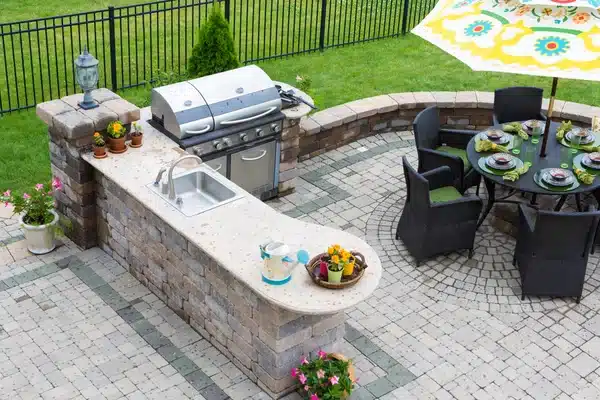
- Beside an outdoor kitchen. Pairing a pergola for the seating area with solid cover over the cooking zone splits the space well.
Our Abita Springs pergolas page shows how we approach these lots, and if the floor under the pergola needs work, our Abita Springs custom patios handle that in the same project.
How do the pines change the plan?
Pine shade is welcome in July, but pines drop needles year-round. Open slats under a heavy canopy turn into a needle catcher. Where the canopy is thick, we often steer people toward a solid-roof structure or a louvered roof that sheds debris when it opens. Where the pergola sits in a gap in the trees, open slats work fine and get the filtered light they’re designed for. On many Abita lots, the best spot is one that catches morning sun and gets afternoon shade from trees already standing.
The trees also affect the ground. Roots and uneven grade push some projects toward framed decks instead of slabs, and Northshore rain travels across sloped wooded lots as much as it falls on them. We plan footings away from major roots and grade the floor to shed water. Our article on building a pergola under tall pines in Abita Springs covers roots and falling limbs in detail.
Do you need a permit for a pergola in Abita Springs?
Ask before you build, because the answer depends on the structure and your address. Two local rules are worth knowing. The Town of Abita Springs requires a tree removal permit inside town limits for any tree over 6 inches in diameter, measured 4.5 feet above the ground, and it names protected species that need an inspection by the town arborist, including longleaf pine and live oak. And every pergola we build is anchored into real footings and engineered for storm season, with the permits your parish requires pulled as part of the job.
If you’re still choosing between open slats and a full roof, our comparison of a patio cover and a pergola walks through the tradeoffs.
Frequently asked questions
Does a pergola provide shade?
Partial shade. The slats break up direct sun, and the amount depends on slat spacing and direction. Vines or a shade fabric add more, and a louvered roof can close fully.
Is a pergola the same as an arbor?
The terms overlap. People usually call a small, single-entry frame over a path or gate an arbor, and a larger structure over a seating area a pergola.
Wood or aluminum for an Abita Springs pergola?
Both work. Wood brings warmth but needs a finish chosen for humidity. Aluminum doesn’t rot or feed termites, which counts for a lot on a damp, shaded lot.
Thinking about a pergola for your Abita Springs yard? We’ll walk the lot and read the trees, then suggest a spot and a roof type that fit. Call (504) 285-2659 or learn how we work locally on our Abita Springs service area page.